About Joe Yeong
Joe Poh Sheng YEONG, MBBS, PhD, FRCPath



Principal Investigator & Laboratory Director
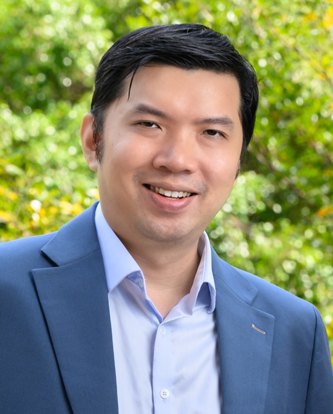
Dr. Joe Yeong Poh Sheng has been listed as World Top 2% scientist since 2024. He is currently a Principal Investigator in the Institute of Molecular and Cell Biology (IMCB, A*STAR), as well as in the Department of Anatomical Pathology, Singapore General Hospital. He has underwent multidisciplinary training which includes clinical (MBBS), immunology (PhD) and histopathology (British Royal College of Pathologist, Fellowship and Mmed (Pathology)). Dr. Joe Yeong's main research focus is to understand and overcome the resistance of cancer immunotherapy, by using advanced technologies and AI. As an immunopathologist, his key vision is to bridge immunologists and pathologists. He is a pioneer in spatial technologies, translated assays to clinic, and has published > 150 papers in the field (Top 2% Scientist) (>100 invited talks internationally). His works on cancer immunology are included in multiple National & international funded studies as well as industry sponsored projects (>20 million USD since 2017). He served as a committee member in America Society of Clinical Oncology (ASCO), the Co-organizer of World Immunotherapy Council (WIC), Society for Immunotherapy of Cancer (SITC) as well as the multiplex IF expert consensus meetings. He also serves as one of the founding-Program Chair of one of the largest AI medical Imaging conferences, CLINICCAI-MICCAI and serves as founding board member of MICCAI SIG-ComPath, Board member of Asian Society of Digital Pathology. He is also having editorial roles of Nature Springer, JITC, JCO (ASCO) and World Scientific (Chief Editor). He serves as a Secretary (Executive) in Singapore Society of Oncology – Cancer Immunotherapy Consortium, Co-lead in Education/Diagnostic of Singhealth Duke-NUS Cell Therapy Centre as well as Advisor (Spatial Technology), Cancer Discovery Hub, National Cancer Centre. In 2023, he co-founded World Immunotherapy Council Asian Chapter for promoting tumour immunology and advancing cancer immunotherapy education.
Current Positions
- Director of Immunopathology, Pathology ACP, SingHealth Duke-NUS
- Co-Lead of Biomedtech Initiative, Singapore General Hospital
- Principal Investigator in Anatomical pathology, Singapore General Hospital
- Senior Principal MLS, Department of Microbiology, Singapore General Hospital
- Program Lead, Proteomics and Immuno Dx, MedTech Cluster, A*STAR
- Group Leader, Institute of Molecular and Cell Biology, A*STAR
- Associate Professor, Pathology Academic Clinical Program, Duke-NUS Medical School
- Visiting Assoc. Professor, Dept. of Surgery, Faculty of Medicine, University of Malaya
- Principal Associate, Cancer Science Institute of Singapore, National University of Singapore
- Executive secretary, Singapore Society of Oncology – Cancer Immunotherapy Consortium
- Education/Diagnostic Co-Lead, SingHealth Duke-NUS Cell Therapy Centre
Academic Qualifications
- Royal College of Pathologists (UK) Fellowship (2023)
- Master of Medicine (Pathology), University of Western Sydney (2019)
- PhD (Cancer Immunology, Integrative Science & Engineering, National University of Singapore, 2014)
- Bachelor of Medicine, Bachelor of Surgery (MBBS, Fudan University, 2009)
Research Interests
- Integrative translational research to combine tumour immunology and pathology (immunopathology), focusing on the application of immune markers in routine clinical practice, with emphasis on immunotherapy and precision medicine.
- Studying the mechanism of immunotherapy resistance.
- Automation, standardization and translation diagnostic test (processing-imaging/running-analysis).
- AI-triaged value based healthcare and global health in the field of immunopathology
- Multi-omics and spatial multi-omics.
Contribution to Science
Spatial Technology: Pioneer and key opinion leader (published >130 papers) in the field of mIHC and spatial technologies. He has automated multiplex IHC and developed the world-first multiplex IHC assay for translation (licensed out to the market). For this reason, he now leads multiple global initiative including the Society for ImmunoTherapy of Cancer (SITC) mIF guideline (mxIF-SIG).
AI: Co-founded Clinical Day of International Conference on Medical Image Computing and Computer Assisted Intervention (CLINICCAI) of the Medical Image Computing and Computer Assisted Interventions (MICCAI) to facilitate translation of AI tools to the clinics. He is a regular program chair of CLINICCAI every year and an organiser of MICCAI's COMPAYL workshop that focuses on digital pathology. He also actively plays a role as a committee member in the Asian Society of Digital Pathology and African Society of Digital Pathology. He has been invited to join the editorial board of the Journal of Clinical Oncology, Clinical Cancer Informatics, and regularly reviews AI Pathology paper in top journal such as Nature.
Drug development: Original team member of the first made-in-Singapore ADC (EBC-129) approved by the U.S. Food and Drug Administration (FDA) for entry into first-in-human studies. Not only did the team identify this drug target, Joe led the team to develop a Companion Diagnostic Assay (CDx) for FDA IND filing, as well as an AI tool to assist patient selection in the clinical trial. The trial is now in Phase 1b, moving towards Phase 2.
Cancer Immunotherapy: Co-founded the SITC World Immunotherapy Council (Asian chapter) and have been leading the global efforts as a SITC-WIC organizer since 2019. He has also been selected to join the Parker Institute for Cancer Immunotherapy (PICI) as an affiliated investigator with a funded project. This makes him the only PICI investigator in APAC.
Science: He is listed as the top 2% scientist since 2024. Some of his key scientific findings includes long COVID etiology as persistent virus in the tissue (1), CD39 as a tumor antigen specific T cell marker (2) and AI can be adopted to predict spatial immune signature for personalized medicine (3).
References: (1) Goh, et al. Case report: Persistence of residual antigen and RNA of the SARS-CoV-2 virus in tissues of two patients with long COVID. Front Immunol. 2022 Sep; 13:939989. JIF: 6.429 (2) Meng, et al. The prognostic value of CD39 as a marker of tumor-specific T cells in triple-negative breast cancer in Asian women. Laboratory Investigation. 2024 Mar; 104(3):100303. JIF: 5.5 (3) Jia, et al. A Spatial Immune Scoring System Enabled by Artificial Intelligence. Nature. 2025 Mar. JIF: 50.5
Top 10 Publications (H-Index=44, >150 publications with >50 first/corresponding authored)
- Goh D, et al. Early Identification of High-Risk Patients with HCC Relapse: A Spatial Immune Scoring System Enabled by Artificial Intelligence. Nature. 2025 March 12.
- Fincham REA, et al. The interplay between natural killer cells and pancreatic stellate cells in pancreatic ductal adenocarcinoma. Cancer Commun (Lond). 2024 Dec 9.
- Periasamy et al. Regulation of non-canonical proteins from diverse origins through the nonsense-mediated mRNA decay pathway, Proteomics 2024.
- Meng J, et al. The prognostic value of CD39 as a marker of tumor-specific T cells in triple-negative breast cancer in Asian women. Laboratory Investigation. 2023 Dec; 104(3):100303
- Kaya, et al. Multimodal molecular landscape of response to Y90-resin microsphere radioembolization followed by nivolumab for advanced hepatocellular carcinoma. Journal for ImmunoTherapy of Cancer 2023;11:e007106.
- Cheung CCL, et al. Residual SARS-CoV-2 viral antigens detected in GI and hepatic tissues from five recovered patients with COVID-19. Gut. 2022 Jan;71(1):226-229
- Goh, et al. A comparison between non-pulmonary and pulmonary immune responses in a HIV decedent who succumbed to COVID-19. GUT, 2021
- Yang et al. SC-MEB: spatial clustering with hidden Markov random field using empirical Bayes. Briefings in Bioinformatics 2021
- Lam, J.H., et al. CD30+OX40+ Treg is associated with improved overall survival in colorectal cancer. Cancer Immunology, Immunotherapy (2021).
- Ng H, et al. Immunohistochemical scoring of CD38 in the tumour microenvironment predicts responsiveness to anti-PD-1/PD-L1 immunotherapy in hepatocellular carcinoma. J Immunother Cancer. 2020;8(2):e000987
Recent Scientific Awards
| Year | Awards |
|---|---|
| 2020 | A*STAR Career Development Award Featured in The Pathologist |
| 2021 | APEC ASPIRE Prize Award finalist (Representing Singapore) |
| 2022 | Top Cited Author 2020-2021, Wiley Featured in Nature News Featured in Nature Podcast |
| 2023 | Singapore-China government joint innovation call |
| 2024 | World Immunotherapy Council Asian Chapter, Research Contribution Award MedTech Actuator 2024 Finalist World's Top 2% Scientist |
| 2025 | Research Award, Chapter of Pathologists, Academy of Medicine Singapore Featured on Nature Cover Featured on The Pathologist Featured on Nature Custom Media Featured in multiple mainstream media including Straits Times Awarded Singapore National Clinician Innovator Award 2025 World's Top 2% Scientist |
Editorship of Journals/Books
- JCO Clinical Cancer Informatic (ASCO Journal)
- Immunoinformatics (Elsevier)
- Scientific Report (Nature Springer)
- SLAS (Society for Laboratory Automation and Screening) Technology Journal
- Frontiers in Immunology
- Frontiers in Molecular Bioscience Journal
- Pathogens
- Precision Cancer Medicine
- World Scientific Annual Review of Cancer Immunology (Chief editor)
- Translational Immunology, Springer
- Multiplex Immunofluorescence, Springer
Advisory
- Cancer Discovery Hub, National Cancer Centre Singapore
- ImmunoQs Pte Ltd.
- Single Cell Spatial Analysis Program (SCSAP) at University of Michigan
For Prof Joe YEONG's innovations, IPs and professional memberships, please go to innovation page.